
October 12, 2026
The moment you see each other on your wedding day should feel like yours. Not rushed between makeup appointments and family arrivals, not performed for a crowded room, and not dictated by a timeline that leaves no space to breathe. Thoughtful first look planning creates a private pause before the celebration begins – one where anticipation softens into connection and the rest of the day can unfold with greater ease.
For couples who value refined imagery and genuine emotion, a first look is not simply a photo opportunity. It is a decision about how you want to experience your wedding day.
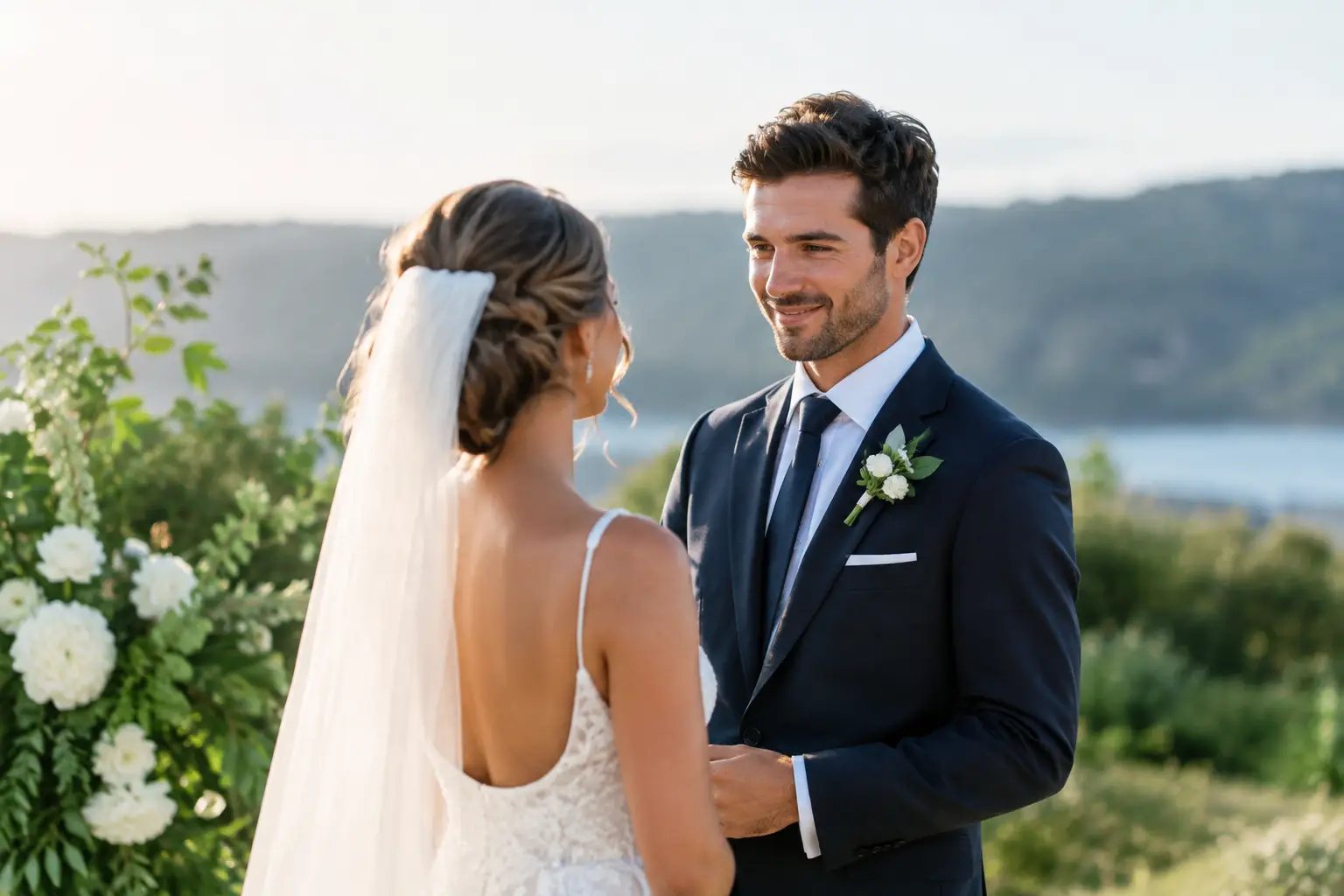
A first look is a private meeting between you and your partner before the ceremony. Usually, one partner waits in a carefully chosen location while the other approaches. Your photographer guides the timing and placement, then steps back enough for the reaction to belong entirely to the two of you.
The value is often emotional before it is logistical. Many couples spend the morning surrounded by loved ones, planners, beauty teams, and wedding party members. A first look can be the only quiet moment you share before your vows. It gives you permission to hold hands, laugh, cry, admire one another, or simply take in the fact that the day you planned is finally here.
It also changes the rhythm of the celebration. When portraits are completed before the ceremony, you can often join cocktail hour, greet guests, and enjoy the atmosphere you worked so carefully to create. For a luxury wedding with layered design, a full guest list, and a thoughtfully paced evening, that time can be invaluable.
Still, a first look is not mandatory. Some couples feel deeply connected to the tradition of seeing each other for the first time at the aisle. There is no universally correct choice. The best plan is the one that protects the meaning you want to feel.
Before deciding where to place a first look in your timeline, consider what matters most to you. Do you want a quiet exchange before the day gains momentum? Is attending cocktail hour a priority? Are you planning a winter wedding, when daylight disappears early? Will your ceremony begin near sunset, leaving limited time for portraits afterward?
Your answers should shape the schedule, not the other way around. A meaningful first look requires more than ten open minutes. It needs enough margin for you to arrive, settle in, and be present without watching the clock.
For many celebrations, a first look works beautifully about two to three hours before the ceremony. This window can allow for couple portraits, wedding party photos, and immediate family portraits afterward. The exact timing depends on travel between locations, the size of your family, the season, and the ceremony start time. A summer wedding in Dallas may call for a later portrait window to avoid the strongest heat, while an autumn celebration may benefit from beginning earlier to make the most of softer afternoon light.
A photographer and planner should build this portion of the day together. At Matool Weddings, that coordination is approached with the same care as the imagery itself: a composed timeline gives authentic moments room to happen.
The ideal location is not always the most dramatic corner of the venue. Privacy, light, and proximity matter just as much as architecture. A tucked-away garden path, a quiet suite with window light, a shaded courtyard, or a grand staircase before guests arrive can all create an elegant setting.
Consider what will be behind you and what might interrupt the moment. A visually beautiful space can quickly lose its intimacy if vendors are crossing through it, guests are arriving nearby, or golf carts and deliveries are moving in the background. Ask your planner to reserve the location for a short period, and let your photo team assess the light in advance.
If you are getting ready off-site, account for transportation honestly. A fifteen-minute drive can become thirty minutes once dresses, traffic, parking, and a full wedding party are involved. Keeping the first look near the ceremony venue often preserves valuable time and lowers stress.
The most common first look planning mistake is treating it as one item on a checklist. A rushed reveal can feel more like a cue than a memory. Plan for the approach, the reaction, a few minutes alone, and portraits afterward.
Try not to script what you will say. You may have written private notes, exchanged gifts, or simply want to take one another in. All of those choices are beautiful. What matters is that neither of you feels pressured to create a particular reaction for the camera.
A gentle approach works best. One partner can stand facing away while the other walks up, taps a shoulder, or calls their name. Alternatively, you may prefer to turn toward each other at the same time. If physical contact beforehand feels right, holding hands around a corner or behind a door can offer a tender variation without fully seeing one another.
After the reveal, protect five to ten minutes of unstructured time. Your photographer may give occasional direction to keep you in beautiful light, but the photographs are strongest when there is space for natural interaction. This is where a calming hand squeeze, an unplanned laugh, or a quiet tear becomes part of your visual story.
A first look creates flexibility, but it should not turn your day into a long portrait session. The goal is polished, editorial imagery that still feels lived in. Gentle direction can help you look your best while leaving room for movement and honest connection.
Following the first look, most couples begin with portraits together, then move into wedding party and family photographs. Keep the groupings organized before the wedding day. Your planner or a trusted family member can help gather the right people, while your photography team guides each grouping efficiently.
Share any family dynamics in advance. If there are sensitive relationships, elderly relatives who need seating, or loved ones who must be photographed early, those details belong in the plan. They allow your team to care for your people thoughtfully rather than solving complications in the moment.
You may also choose to leave some portraits for after the ceremony. If golden-hour images are important to you, stepping away for ten to fifteen minutes during dinner or just before the reception begins can create a second visual chapter of the day. The light is often softer, you are more relaxed, and the photographs can feel especially cinematic.
There are meaningful reasons to wait until the ceremony. Perhaps the aisle reveal has always been central to your vision, your ceremony is intimate enough to preserve a sense of privacy, or you simply know that tradition feels emotionally right for both of you.
If you decide to wait, the timeline needs a different kind of protection. Schedule a first touch, letter exchange, or private prayer if you would still like a moment of connection beforehand. Complete as many individual portraits, wedding party photos, and detail photographs as possible before the ceremony. Then reserve a realistic portrait window afterward, knowing that cocktail hour may need to be extended or that you may miss part of it.
A winter ceremony after sunset may also require an intentional lighting plan for post-ceremony portraits. This is entirely achievable, but it should be discussed early so the result feels elegant rather than improvised.
First looks with a parent, grandparent, sibling, or wedding party can be deeply moving, particularly when those relationships have shaped your journey. These moments work best when they are chosen with intention rather than added simply because they are popular online.
Consider the pace of the morning. If you want a first look with your father or mother, schedule it after you are fully dressed and before the couple’s first look. If you want to include your wedding party, keep the gathering brief and joyful, then transition directly into portraits. Too many reveals can fragment the day, while a few meaningful ones can make it richer.
Your wedding photographs should preserve more than how everything looked. They should hold the anticipation in your hands, the relief in your laughter, and the expression on the face of the person who has waited to marry you. Give that moment a little room. It may become one of the quietest, most lasting memories of the day.