September 22, 2026
A wedding gallery should bring you back to how the day felt: the quiet breath before you walk down the aisle, the warmth of a parent’s hand, the way your partner looked at you when the room disappeared. The choice between editorial versus traditional wedding photos is not simply an aesthetic decision. It shapes how you spend your wedding day, how much direction you receive, and which memories take center stage in the images your family will hold onto for decades.
For many couples, the most beautiful answer is not choosing one approach exclusively. It is finding a photographer who understands the value of both polished artistry and honest connection.
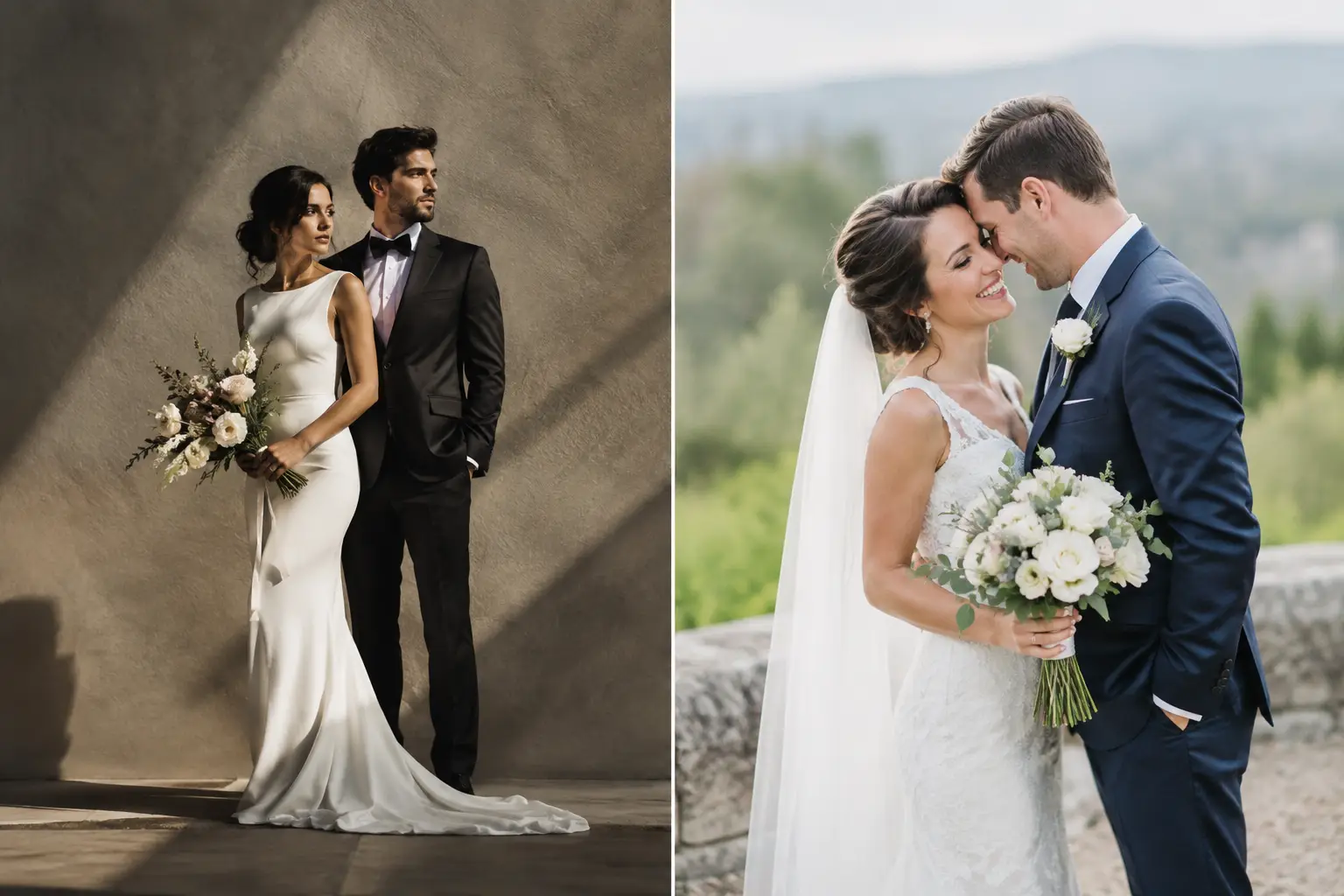
Editorial wedding photography takes its visual language from fashion magazines, refined design publications, and cinematic portraiture. It is intentional, composed, and attentive to every element within the frame: light, architecture, florals, fabric, posture, and negative space.
An editorial image might show a bride standing near a window with her gown arranged deliberately, the lines of a Dallas ballroom framing her silhouette. It may capture a groom adjusting his cufflinks in a beautifully appointed suite, or a couple walking through a sculptural venue with a sense of movement and ease. The photograph feels elevated, but it should never feel disconnected from who you are.
This style often includes gentle direction. Your photographer may suggest where to stand for the most flattering light, guide the placement of your hands, or give you a small action to create natural movement. Rather than asking you to hold a stiff smile, they may invite you to walk slowly together, lean into each other, or share a private thought. The best editorial direction is calm and confidence-building. It leaves room for your personality to come through.
Couples drawn to editorial photography often care deeply about the visual story of their celebration. They have selected a meaningful venue, considered every table setting, chosen fashion with intention, and want those choices documented with artistry. Editorial images honor the atmosphere you worked hard to create.
They also create portraits with staying power. When composed with true-to-color editing and an appreciation for timeless design, an editorial photograph can feel current without being trapped in a passing trend. It is polished enough for an album spread, yet personal enough to feel like your life.
The trade-off is time and attentiveness. Meaningful editorial portraits need a thoughtfully protected portion of the timeline, especially if you want photographs in multiple locations or at sunset. This does not require hours away from your guests, but it does require a photographer and planner who know how to work efficiently.
Traditional wedding photography is built around clear documentation. It prioritizes important people, significant events, and the classic portraits that families expect to see. Think of a well-organized family formal after the ceremony, the couple facing the camera with relaxed smiles, the wedding party gathered together, and each major reception moment photographed clearly.
Traditional does not have to mean dated, overly posed, or flat. At its best, it is dependable and considerate. It recognizes that your grandmother may treasure a formal portrait of the whole family just as much as you treasure an unguarded laugh during cocktail hour.
This approach is especially valuable for celebrations with large family groups, cultural traditions, multigenerational guests, or a full weekend of events. A photographer who can organize family portraits with warmth and clarity helps everyone feel seen while keeping the day moving.
Traditional photographs offer reassurance. They make certain that no essential combination is overlooked: both sets of parents, siblings, grandparents, wedding party members, and the people who traveled far to celebrate with you.
They also preserve the ceremony and reception in a straightforward way. Your first dance, parent dances, toasts, cake cutting, and exit are captured so you can revisit not only the feeling, but the full shape of the event. For couples who worry that candid photography alone could miss something meaningful, this structure provides peace of mind.
The limitation appears when tradition becomes overly rigid. If every moment is directed and every image asks you to look into the camera, the gallery can lose the spontaneity that makes a wedding feel personal. A beautiful record needs both the expected photographs and the unplanned ones.
The central difference is not whether one style is better. It is where each style places its attention.
Editorial photography asks, “How can this moment look and feel artful?” Traditional photography asks, “What needs to be preserved clearly?” One emphasizes composition and atmosphere; the other emphasizes coverage and inclusion. Both can be romantic. Both can be elegant. Both can become treasured family heirlooms.
The experience can feel different, too. A strongly editorial photographer may guide you more during portraits and seek out specific light or architectural settings. A strongly traditional photographer may focus on formal groupings and a reliable sequence of key events. Documentary photography, often confused with editorial photography, is a third element: it observes real moments as they unfold with minimal interruption.
For a luxury wedding day, a balanced approach is often the most natural fit. You deserve luminous, artfully composed portraits of the two of you, but you also deserve a photograph of your father seeing you ready for the first time. You deserve refined images of your reception design, but also the joy on your friends’ faces when the dance floor opens.
Start with the photographs you return to when you imagine your wedding. If you are drawn to thoughtful styling, beautiful light, movement, and fashion-forward portraits, you may want an editorial foundation. If you immediately picture family groupings, smiling faces, and every milestone recorded clearly, traditional coverage should be a priority.
Then consider how you want to feel in front of the camera. Couples who say they are awkward or camera-shy do not necessarily need less direction. Often, they need better direction: someone who knows how to give a simple prompt, adjust a detail with care, and make space for a genuine reaction. Gentle guidance can make editorial portraits feel remarkably natural.
Your timeline matters as well. If portraits are a high priority, reserve intentional time before the ceremony, after the ceremony, or near sunset. If you want to spend nearly every minute with guests, a streamlined portrait plan and a second photographer can protect both your experience and your coverage. There is no universal formula. The right plan reflects your priorities, your venue, and the pace of your celebration.
When reviewing a photographer’s work, look beyond a few striking portraits. Ask to see complete galleries from weddings with a similar guest count, venue type, or timeline. Notice whether family photos are flattering and organized, whether reception images hold atmosphere without losing clarity, and whether candid moments feel emotionally present.
It is also helpful to ask how they direct couples, how they coordinate family formals, and how they handle changing light or a delayed timeline. Their answers reveal more than a portfolio can. You are looking for a creative partner who can make beautiful photographs while helping the day feel calm, personal, and well cared for.
The wedding photographs that grow more meaningful with time are rarely defined by one label. They include the artful portrait you might frame above your fireplace, the formal family photograph that becomes irreplaceable, and the fleeting in-between image you did not know anyone saw.
At Matool Weddings, this balance is approached with intention: true-to-color editorial imagery, thoughtful portrait guidance, and documentary observation for the moments that cannot be recreated. The goal is never to turn your wedding into a photo shoot. It is to preserve authentic moments, artfully, while giving you the confidence to be fully present.
As you choose a style, choose the feeling you want your photographs to carry years from now. The right images will not only remind you how beautiful everything looked. They will return you to the people, promises, and quiet joy that made the day entirely yours.