August 23, 2026
The photographs you keep closest rarely come from a moment you were asked to feel. They come from your father seeing you in your wedding attire for the first time, your friends reaching for you on the dance floor, or the quiet breath you take together just after the ceremony. Yet most couples also want the images that honor the extraordinary care behind their celebration: the architecture, fashion, florals, tablescape, and a portrait that feels worthy of print. That is where documentary vs editorial wedding photography becomes a meaningful conversation rather than a simple style comparison.
The right approach should not ask you to choose between looking beautiful and feeling present. It should give you space for both.
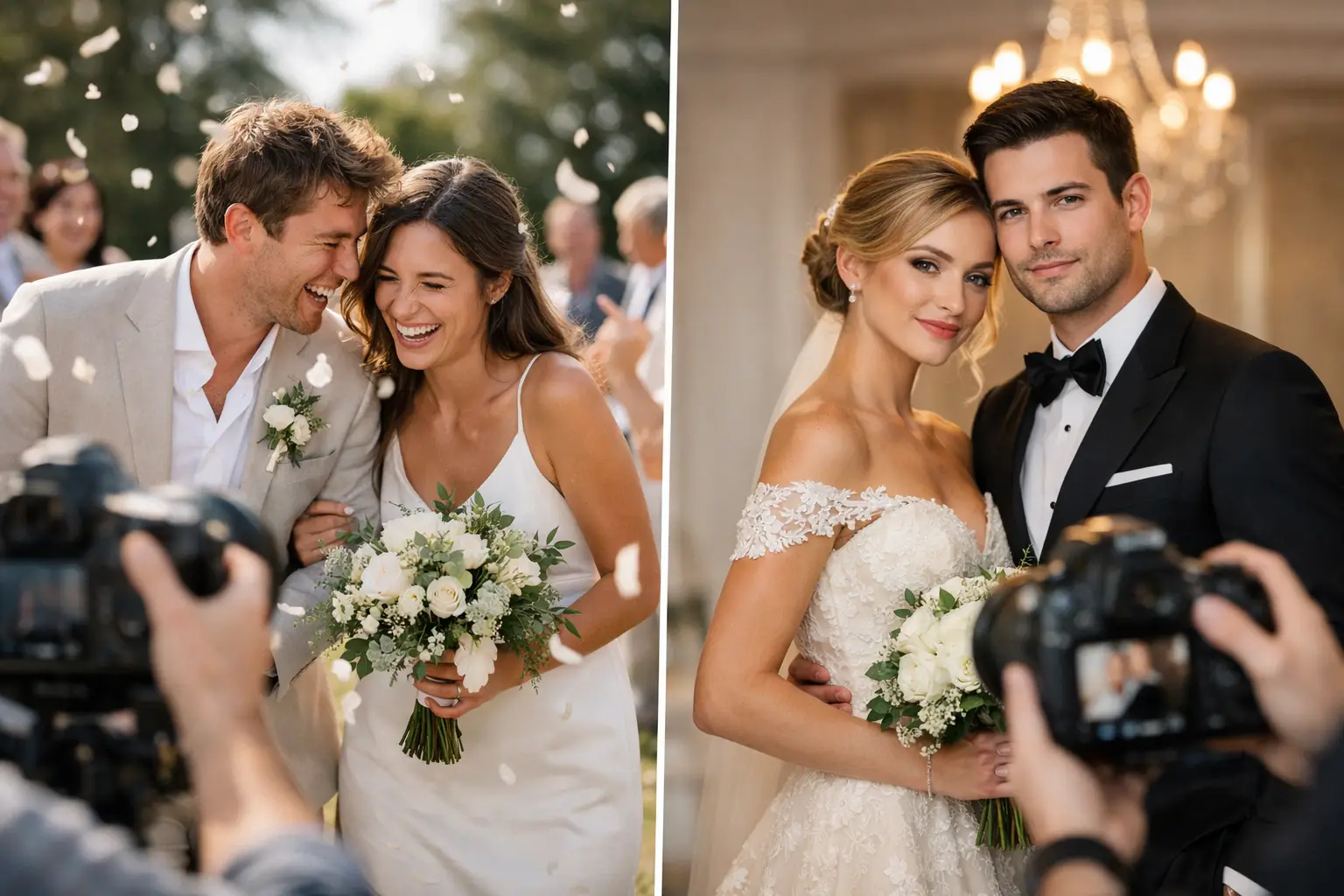
Documentary wedding photography is rooted in observation. The photographer watches carefully, anticipates emotion, and photographs real moments as they unfold with as little interruption as possible. Rather than creating every frame, they preserve the laughter that arrives unexpectedly, the reassuring hand squeeze before the ceremony, and the movement of a reception that feels completely alive.
At its best, this approach creates an honest visual record of the day. You may not remember every expression exchanged during your vows or the way your grandmother looked at you during dinner. Documentary images bring those details back with a kind of emotional immediacy that can feel almost cinematic.
This style is especially valuable during unscripted parts of a wedding: getting ready with loved ones, family reactions, cocktail hour conversations, speeches, and dancing. These are moments where too much direction can change the atmosphere. A skilled documentary photographer knows when to remain quietly in the background and where to stand so that the image still feels intentional.
Documentary work is not the same as casual or unpolished photography. It requires quick instincts, an understanding of light, and the ability to recognize a story before it fully happens. The result can be expressive, intimate, and deeply personal.
Editorial wedding photography takes inspiration from the polish and composition of fashion and luxury publications. It is art-directed, refined, and thoughtfully composed. Your photographer may offer gentle posing guidance, adjust the placement of a hand, suggest a turn toward the light, or create a few quiet moments where you can focus solely on each other.
The purpose is not to make you look stiff or perform a version of yourselves. It is to create photographs with presence: elegant portraits, carefully framed bridal details, elevated images of your ceremony space, and images that reveal the design of the day with clarity.
Editorial photography is particularly effective for couples who have invested in meaningful visual details. A sculptural gown, custom stationery, a dramatic Dallas ballroom, an outdoor ceremony with layered floral installations, or a destination venue with remarkable texture all deserve to be photographed with care. These images document not only what was there, but how the celebration felt to inhabit.
There is a practical advantage, too. Most people do not spend their lives in front of a camera. Calm direction can remove uncertainty. Instead of wondering what to do with your hands or whether you are standing naturally, you receive simple, confidence-building guidance that lets you settle into the moment.
The simplest distinction is this: documentary photography responds to what is happening, while editorial photography shapes a photograph with more intention and direction.
But on a wedding day, the difference is rarely absolute. A photographer can document the genuine emotion of your first look, then guide you a few steps toward more flattering light. They can capture your friends naturally during cocktail hour, then spend a focused ten minutes photographing your reception room before guests enter. They can preserve an authentic laugh during portraits while offering just enough direction to ensure you look relaxed, connected, and beautifully composed.
The experience matters as much as the final gallery. A purely documentary approach may feel ideal for couples who want to forget the camera is present, but it can leave less time for polished portraits and intentional detail imagery. A heavily editorial approach can create striking images, yet too much instruction may pull a couple away from the people and moments they planned the day around.
For many discerning couples, the most enduring choice is a balanced one: authentic moments, artfully preserved, alongside timeless editorial images that never feel overworked.
A wedding is not a photoshoot, even when it is visually extraordinary. It is a gathering of the people who shaped your life, a ceremony with real emotional weight, and a celebration that moves quickly. Your photography experience should respect that.
A balanced approach begins with preparation. Before the wedding, your photographer learns what matters most to you: the family relationships, the heirloom pieces, the reception atmosphere you spent months planning, and the portrait style that feels like you. A thoughtful timeline creates room for those priorities without turning the day into a series of interruptions.
During portraits, gentle direction gives structure without asking you to perform. You might be invited to walk slowly together, bring your foreheads close, or pause and notice one another. These prompts are simple because the goal is not to manufacture emotion. It is to make room for it while ensuring the light, composition, and styling honor the occasion.
Then, when your day begins to unfold, the photographer steps back. The toast that makes everyone cry does not need to be choreographed. Neither does the moment you see your reception transformed or the hug from a friend who traveled across the country to celebrate you. Those memories are strongest when they remain undisturbed.
Start by looking beyond a photographer’s best individual images. A beautiful portrait can be made in many styles. What reveals a photographer’s approach is a full wedding gallery: how they photograph people in motion, manage difficult light, preserve family interactions, and tell the story from beginning to end.
Notice whether the images feel true to color and whether skin tones, florals, and venue details are rendered with lasting elegance. Trends can be compelling in the moment, but wedding photographs are intended to live in albums, frames, and family archives for decades. A refined, true-to-color finish often allows the design and emotion of your day to remain recognizable and beautiful over time.
It also helps to ask about direction in specific terms. Will the photographer guide you during portraits? How do they handle large family formals? Do they photograph reception details before guests arrive? How do they preserve candid moments while keeping the day on schedule? Clear answers tell you far more than a label alone.
If you feel anxious in front of the camera, editorial guidance may be a gift rather than a limitation. If your greatest priority is uninterrupted time with family and friends, documentary coverage should be central to the plan. If both statements are true, as they are for many couples, look for a team experienced in moving gracefully between the two.
In the weeks after your wedding, you may first be drawn to the grand portraits and carefully styled details. They reflect the beauty you envisioned and the effort that brought it to life. Years later, the candid frames often gain a different kind of gravity: your parents dancing, a loved one’s smile, the children who have grown, and the people who were there exactly as they were.
That is why wedding photography deserves more thought than choosing a trend or a category. It is an act of preservation. The strongest galleries hold both the visual beauty of the celebration and the emotional truth beneath it.
At Matool Weddings, that balance is approached with calm guidance, attentive observation, and a commitment to photographs that feel polished without losing their pulse. When you choose a photographer, choose the person who helps you remain fully present while creating images you will be grateful to hand forward.